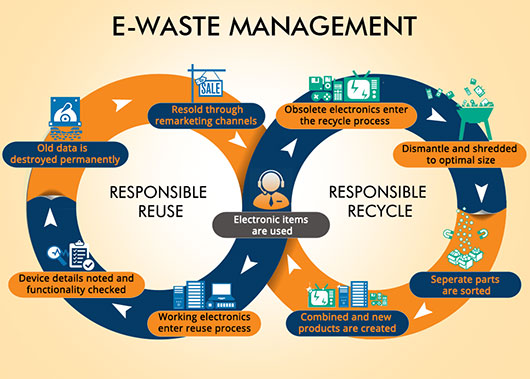
What is E-Waste Management?
E-waste management solutions, E-waste management is the systematic collection, recycling, and disposal of discarded electronic devices. It aims to safely recover valuable materials (like gold and copper) while preventing toxic chemicals—such as lead and mercury—from polluting the environment and harming human health. [1, 2, 3, 4]
Why It Matters
Electronic waste is the fastest-growing solid waste stream in the world. Proper management is critical for several reasons: [1]
- Health & Safety: Improper disposal leads to toxic chemicals leaching into soil and water. Unregulated burning releases hazardous fumes that threaten public health.
- Resource Conservation: Electronics contain finite, valuable, and rare earth metals. Recycling them extracts these materials for reuse, minimizing the need for new mining.
- Circular Economy: It keeps materials in the production loop, promoting sustainable consumption and decreasing carbon emissions. [1, 2, 3, 4, 5]
Best Practices for E-Waste Management
E-waste management solutions. Effective e-waste management relies on the 7 R’s: Rethink, Refuse, Reduce, Reuse, Repair, Regift, and Recycle. Solutions prioritize a circular economy approach to minimize toxic pollution and recover valuable raw materials like gold, silver, and copper from electronic devices. [1, 2, 3]
How to Implement an E-Waste Management Strategy
Implementing an e-waste management strategy requires a phased approach: assessing your current inventory, ensuring secure data destruction, establishing safe collection and storage procedures, and partnering with certified recyclers. A structured plan protects sensitive data, ensures legal compliance, and minimizes environmental hazards.